The topics addressed during the Association’s Spring Meeting
The heritage and the preservation of family businesses in the ultra-centennial perspective, the structural differences between historic companies in Italy and Japan, united by a strong sense of social responsibility, the importance of the managerial know-how that outlives people and guarantees a brand’s continuity and a company’s longevity.
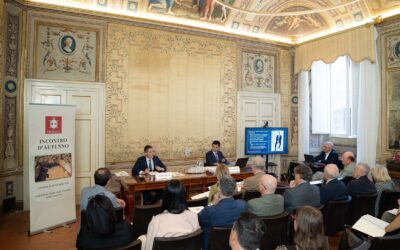
These are the issues that the Italian Historic Companies Association (www.uisitalia.org), an association embracing the oldest “Made in Italy” brands with at least 100 years of uninterrupted activity in the manufacturing sector), addressed on March 23th, 2018 during the conference entitled “Omnia tempus habent – Family and Business in the longevity of historic brands: a comparison between Italy and Japan”, hosted by the headquarters of Villani Salumi (1886) in Castelnuovo Rangone (Modena), where the ultimate secrets of the Italian charcuterie art are preserved and safeguarded.
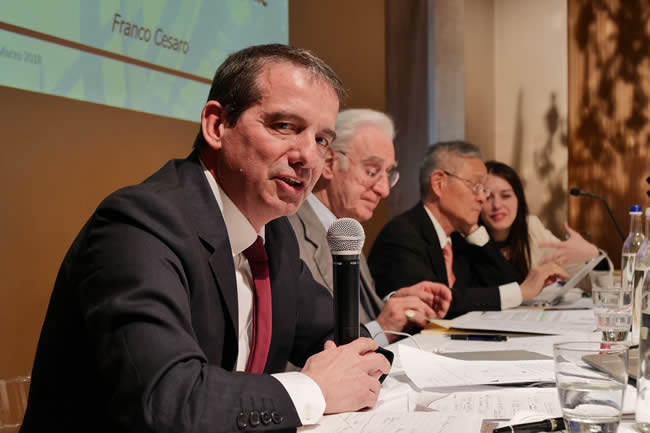
The conference was held during the traditional Spring Meeting and moderated by Franco Torrini on behalf of the Italian Historic Companies Association, with the participation as speakers of prof. Kenji Matsuoka (Ryukoku University) and prof. Franco Cesaro (Cesaro & Associati, family business consultant with teaching activities at Italian and foreign universities).
In his speech, Kenji Matsuoka illustrated the “vertical” structure of historic companies in Japan, still based on the masculine primogeniture system for the exclusive guidance of the company, and underlined how this aspect is in stark contrast to the Italian “horizontal” system, characterized by the direct involvement of brothers and sisters in the management of family businesses, albeit with different tasks.
Franco Cesaro therefore tackled the theme of “vertical” coexistence (of different generations) and “horizontal” coexistence (within the same generation), the issues raised by the inclusion of external managerial skills in family businesses and, finally, the delicate theme of intergenerational turnover. “The right time for generational turnover – said Cesaro – is when the next generation decides to make business, in addition to managing the business, by pursuing long-term objectives that offer long-term prospects to the system, the territory and all the people contributing to create value.